


Original study
Background: Osteogenesis imperfecta (OI) is a rare, inherited connective tissue disorder characterized by decreased bone density and recurrent low-trauma fractures. Bisphosphonates (BF) are currently used to increase bone density and reduce the incidence of new fractures, but the available data mainly concern the use of BF in children. At the same time, due to the early initiation of antiresorptive therapy, an increasing number of patients with OI are reaching adulthood, which requires determining the indications and evaluating the effectiveness of BF therapy in adult patients with OI.
Aims: Evaluation of the efficacy of bisphosphonate therapy in adult patients with osteogenesis imperfecta.
Materials and methods: A longitudinal comparative study of 45 patients with osteogenesis imperfecta was conducted at the Clinic of the Bashkir State Medical University (BSMU). 24 patients received a single dose of zoledronic acid 5 mg / 100 ml intravenously by drip. Bone mineral density (BMD) was determined using X-ray densitometry. The level of pain syndrome was assessed using a visual analogue scale. Connective tissue dysplasia (CTD) was assessed using a modified table by T.I. Kadurina.
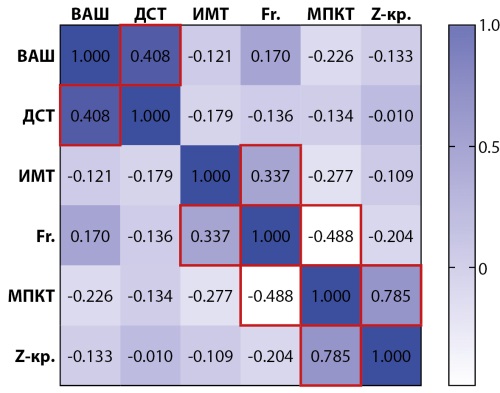
Results: Statistically significant differences were observed when comparing BMI in patients with OI types I and III (23.6±4.6; 28.5±5.9; p=0.0183), I and V (23.6±4.6; 30.8±8.2; p=0.014). There were no statistically significant differences in the levels of CTD scoring, pain syndrome according to VAS and z-score between different types of the disease. Patients who received BF at BGMU showed a statistically significant decrease in pain syndrome (p<0.0001) and an increase in the z-criterion level (p=0.045) one year after the drug administration, regardless of the presence of previous bisphosphonate treatment. When conducting a correlation analysis in patients with OI, a moderate inverse correlation was found between BMD and the number of fractures (r=-0.488, p=0.001). The number of fractures also correlated with BMI (r=0.337, p=0.024). The severity of phenotypic signs of connective tissue dysplasia had a direct moderate correlation with the level of pain syndrome (r=0.408, p=0.005).
Conclusions: In adult patients with OI, low levels of BMD and z-score are maintained, and persistent bone pain syndrome not associated with fractures is present. The intensity of these parameters does not depend on the presence of previous therapy with bisphosphonates. Treatment with drugs from this group is effective, since a statistically significant increase in BMD and z-score according to the results of densitometry, and a statistically significant decrease in the level of pain syndrome in the bones were observed. The main indications for BF administration are: the presence of fractures within a year, low densitometry values (z-score <-2.0), and the presence of severe, moderate, persistent bone pain (VAS > 5 points).
Review
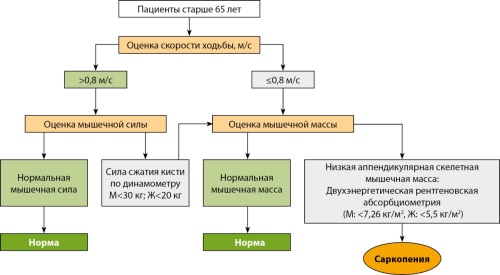
Sarcopenia is an age-associated progressive loss of muscle mass and strength that leads to decreased functional activity, increased risk of falls, fractures, hospitalizations, and significantly contributes to disability and mortality in the elderly. There is no universal explanation for the development of sarcopenia. The mechanisms of muscle mass reduction include the influence of external (chronic diseases, physical inactivity, intake of certain medications, insufficient protein intake with food) and internal factors (age-related neuromuscular degeneration, changes in the level of anabolic hormones, chronic inflammation, and oxidative stress). The multifactorial pathogenesis of sarcopenia explains the lack of generally accepted diagnostic tools for this condition. The purpose of this review is to summarize current information on algorithms for assessing muscle strength, muscle mass, physical performance, and diagnostic criteria for sarcopenia by various research groups. The review describes options for laboratory markers that are promising and of interest in relation to diagnostics and determining the effectiveness of therapeutic and preventive interventions.
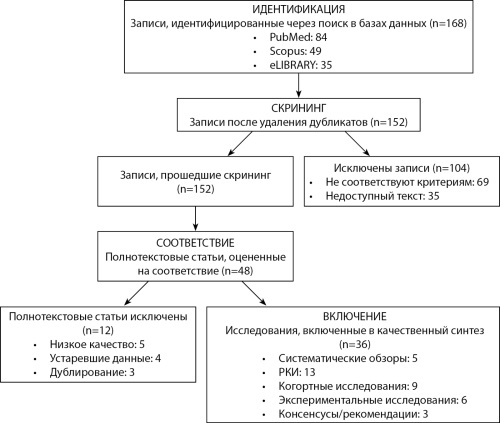
Bisphosphonates, traditionally used to treat osteoporosis, demonstrate a wide range of pleiotropic effects that go beyond their antiresorptive action on bone tissue. This systematic review analyzes current scientific data on the non-antiosteoporotic effects of bisphosphonates obtained in studies from 2015 to 2024. It has been established that bisphosphonates have a pronounced analgesic effect, especially effective in pain syndrome caused by bone metastases. Antitumor effects include oncoprotective action and direct effects on tumor cells through various molecular mechanisms. Cardiovascular effects are manifested in cardioprotective action and influence on vascular calcification processes. The effectiveness of the drugs in joint diseases, including osteoarthritis, has been shown, although data on the effectiveness in aseptic necrosis of the femoral head remain contradictory. Promising areas include use in orthopedic surgery for the prevention of aseptic instability of endoprostheses and the development of conjugates with antibacterial drugs for the treatment of osteomyelitis. Innovative approaches include the use of bisphosphonates for targeted delivery of neurotrophic factors in sensorineural hearing loss. The uniqueness of this review lies in the comprehensive analysis of the entire spectrum of non-antiosteoporotic effects with an emphasis on the latest developments and a critical assessment of the prospects for clinical implementation, taking into account the benefit-risk ratio.
Case report
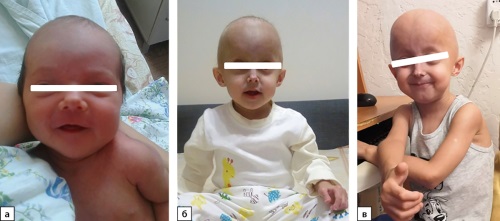
Premature aging syndromes are a group of ultra-rare heterogeneous hereditary diseases that manifest predominantly in childhood and are characterized by accelerated aging of the organism. Despite differences in pathogenesis, the diseases are characterized by multisystem changes, including lesions of the musculoskeletal system, which are represented by multiple joint contractures, deformations of the spine and limbs, and changes in bone structure.
The examination data of 6 patients were analyzed: 5 children (3 boys and 2 girls) with pediatric progeria (Hutchinson-Gilford syndrome) (4 patients with classic genotype of pediatric progeria (c.1824 C>T in the LMNA gene) and 1 child with a non-classical (c.1968+1G>A in the LMNA gene)) and one girl with neonatal progeria (Wiedemann-Rautenstrauch syndrome) (c.3337- 11T>C/ c.3677T>C in the POLR3A gene). The diagnosis was made at the age of 1.9 (1.5; 4.3) years (Me (25%; 75%)). Patients were under the supervision of a pediatric endocrinologist, examined by an orthopedic traumatologist, radiologic studies, and densitometry of the lumbar spine were performed. The age at the time of the initial examination was 6.0 (3.5; 7.2) years, and at the time of the repeated examination — 7.6 (7.5; 9.3) years.
Bone and joint changes in Hutchinson-Gilford syndrome were represented by contractures of interphalangeal joints of fingers and toes, wrist, elbow, hip, knee, and ankle joints, and flat-valgus feet; in a patient with a nonclassical genotype of pediatric progeria, these changes were diagnosed at the first examination at 1 year 6 months of age, which confirms the severe course of the disease in this genotype. In 2 older patients (7 years 5 months and 9 years 10 months) coxa valga on 2 sides with development of aseptic necrosis of the femoral head and closed dislocation of the left femur were also diagnosed. In neonatal progeroid syndrome, musculoskeletal lesions were manifested as multiple contractures of large and small joints and spinal deformity. Bone age either corresponded to the chronologic age or lagged behind by 18 (15; 26) months All patients were diagnosed with osteoporosis according to densitometry (Z-criterion: -3.4 (-3.0; -3.8)); no fractures were recorded.
The revealed changes in bone tissue and musculoskeletal system in our patients correspond to the features described in the world literature in patients with Hutchinson-Gilford and Wiedemann-Rautenstrauch syndromes. The similarity of pathologic changes indicates the similarity of phenotypes of diseases included in the group of premature aging syndromes.
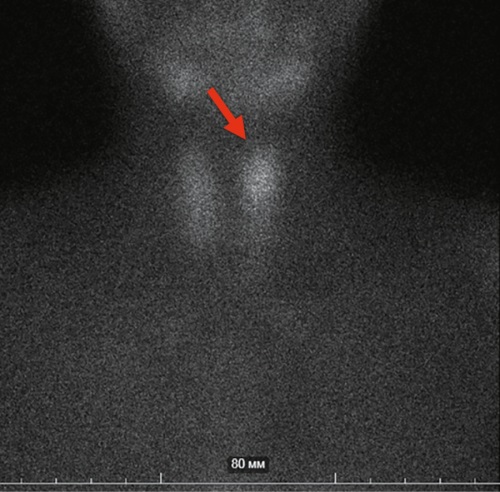
Primary hyperparathyroidism (PHPT) is an endocrine disorder characterized by excessive secretion of parathyroid hormone, leading to multi-organ impairments that reduce patients’ quality of life. The disease is often diagnosed at the stage of bone complications, such as fibrous cystic osteitis (FCO), due to the lack of routine calcium screening. Misinterpretation of FCO as a neoplasm can result in unnecessary biopsies or surgical interventions. Key aspects of differential diagnosis include evaluation of laboratory parameters of calcium-phosphorus metabolism during the diagnostic process, as well as analysis of radiological and histological markers of PHPT. The presented clinical case demonstrates how a comprehensive assessment of data allows differentiation of metabolic bone lesions in PHPT, minimizing errors in treatment strategy.

This work is licensed under a Creative Commons Attribution-NonCommercial-NoDerivatives 4.0 International License (CC BY-NC-ND 4.0).
ISSN 2311-0716 (Online)


